Individual Consciousness – Integral Yoga
The first principle “Nothing can be taught”
To build the foundation for integral yoga the first principle aims to support me to get to know myself. By knowing myself, I can learn to listen to and act from my psychic being (inner truth).
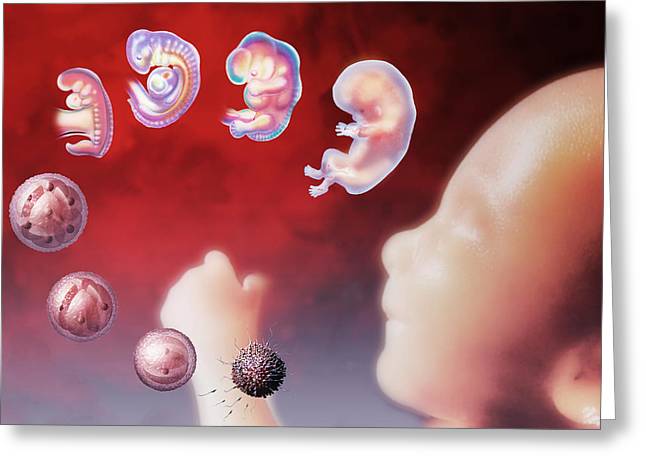
All that I need for my learning and growth is already within me. Through the first principle I can follow my natural development and find intrinsic motivation. I can expand my faculties of consciousness and learn through curiosity, imagination, critical and independent thinking. The purpose of education becomes to nurture all this which already exists naturally inside every human being. With this connection to the self, the psychic being can lead learning and growth by connecting to the wisdom that already exists within each individual.
Faculties of our consciousness:
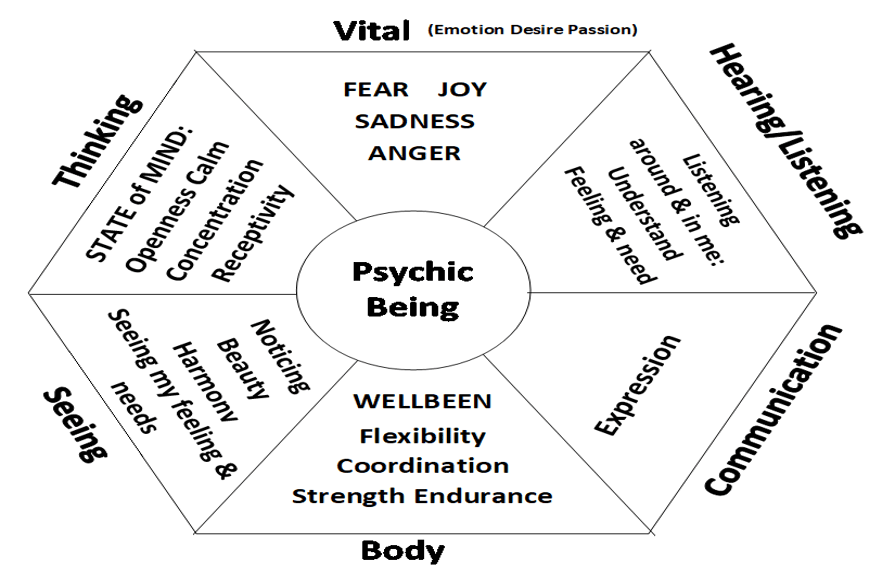
Sri Aurobindo’s theory of integral learning and psychology distinguishes between mind and consciousness, where consciousness corresponds to inner faculties that are the psychological source through which a child can develop their full potential. In TLC we want to delve into a more inward and direct process to develop these faculties, leading to a fuller and deeper development of the whole being, on a psychic, mental, vital and physical plane.
Parents and facilitators
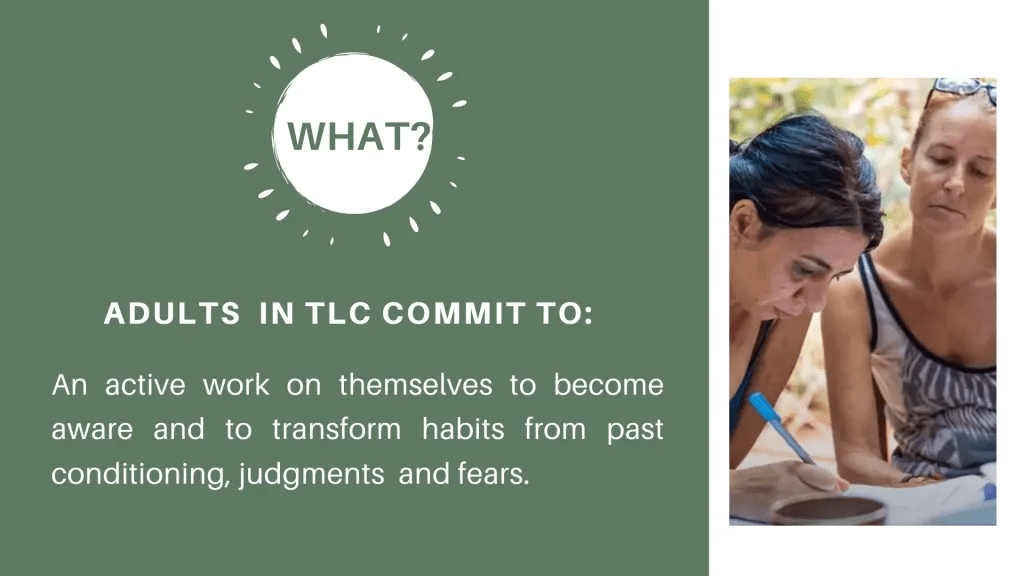
Joining TLC is a conscious choice, using the education of the children as a motivation and reason to work more actively on ourselves, thereby using the children’s education as a vehicle for adult growth. As an adult in TLC you work actively on yourself to become aware and to transform habits from past conditioning, judgments and fears. Being authentic, and by bringing transformative qualities to the forefront in ways of living and being, adults strive to create a healthy and nurturing learning environment for children to grow in.
Nursery – Children ages 2-5
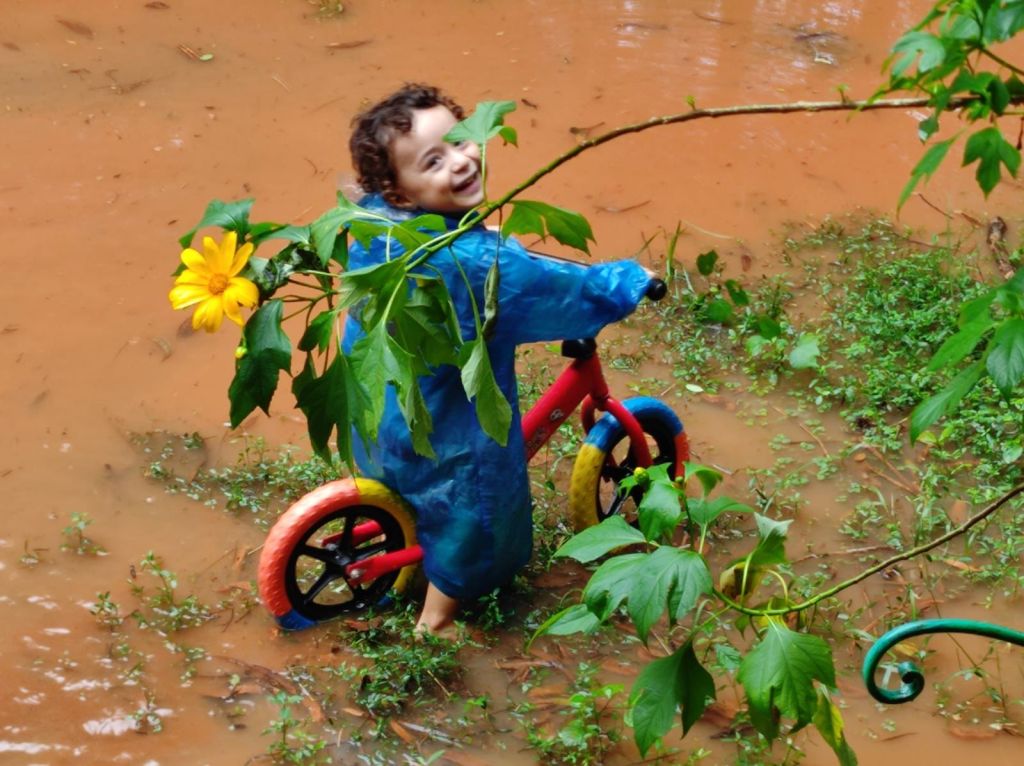
Ages 2-5 is when children consciously start to develop their self-awareness.
Layers of the mind
According to Sri Aurobindo the mind has three different layers:
• Memory is the intersection between the mind and the physical. The child builds memory through all the impressions that come to her/his mind through every life event and stores these memories subconsciously.
• The sense/emotional mind builds the relation to outer life, makes comparisons, associations and creates order. It steers the vital mind and reacts to stimulus. This layer of the mind has a special sensitivity and receptivity during the first 6-7 years of life. During this time the mind is most active, awake and absorbent, and this is the time to bring consciousness into sensorial explorations, develop the ability to concentration, beauty and harmony.
• The ordinary mind is what sets us humans apart from animals, with which we share the previously described layers of the mind (memory and sense/emotional mind). This is also the part of the mind that take us on a journey of consciousness, a collective and individual evolution of mankind. Sri Aurobindo divides the mental consciousness into different sub planes, where the ordinary mind is the starting point to start working toward a deeper consciousness. Our capacity to reason, of intellect, of observation, objectification and subjectification are all a part of this layer of the mind. This is what gives us the capacity to be self-aware. This layer of the mind can be divided into three different parts: the expressive mind, the dynamic mind and the thinking mind.
The first principle of true teaching – Nothing can be taught – tells us that the child is not an empty slate needing an outside adult to program their learning. The child possesses an internal pattern of development that with the right outer stimulation will fuel the child’s intrinsic desire for self-development.
Yet the child is born with nothing. She/he has no memory, no framework for understanding or processing their environment. Language and motor skills are not programmed into them, babies must learn to roll over, sit up and crawl, before they begin to walk. They don’t know how to turn on the lights, count the number of people in the family, or how to respond appropriately to another’s emotions. The child must, literally, learn everything.
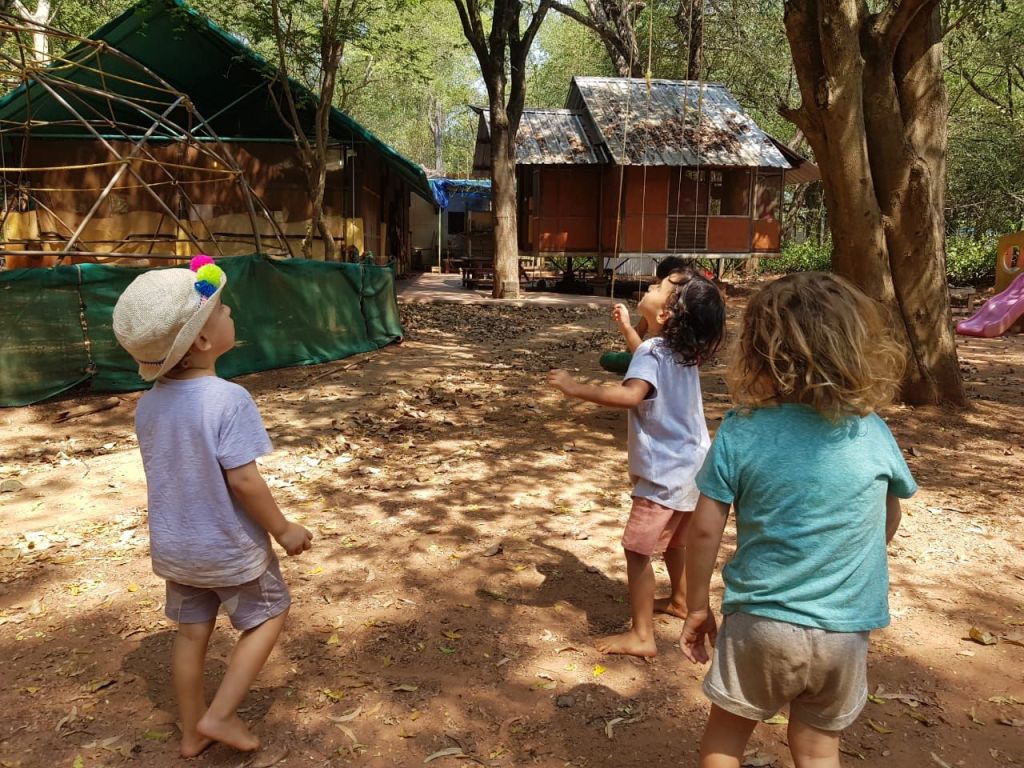
When looking to support the learning journey of our younger children in TLC, we aim at creating opportunities for them to become aware of themselves and their surroundings. To develop the ability to really see, to hear, to understand, feel, think, to move. Sri Aurobindo’s layers of the mind, along with their sub-layers, is what we see as the doorway into the small child and her/his education. This is our starting point. And the capacity for this is already within the child.
As an enormous magical inner force gives the newborn infant the capacity to from within, move from nothing to everything. This expansion of drawing out all the capacities and knowledge is at the forefront from birth until the child is 6-7 old. After this it subsides into a more delicate flame that needs to be kept burning. This magical power is two-fold: an absorbent mind in combination with sensitive periods of development. The three principles of true teaching as described by Sri Aurobindo, are embodied in this super-power.
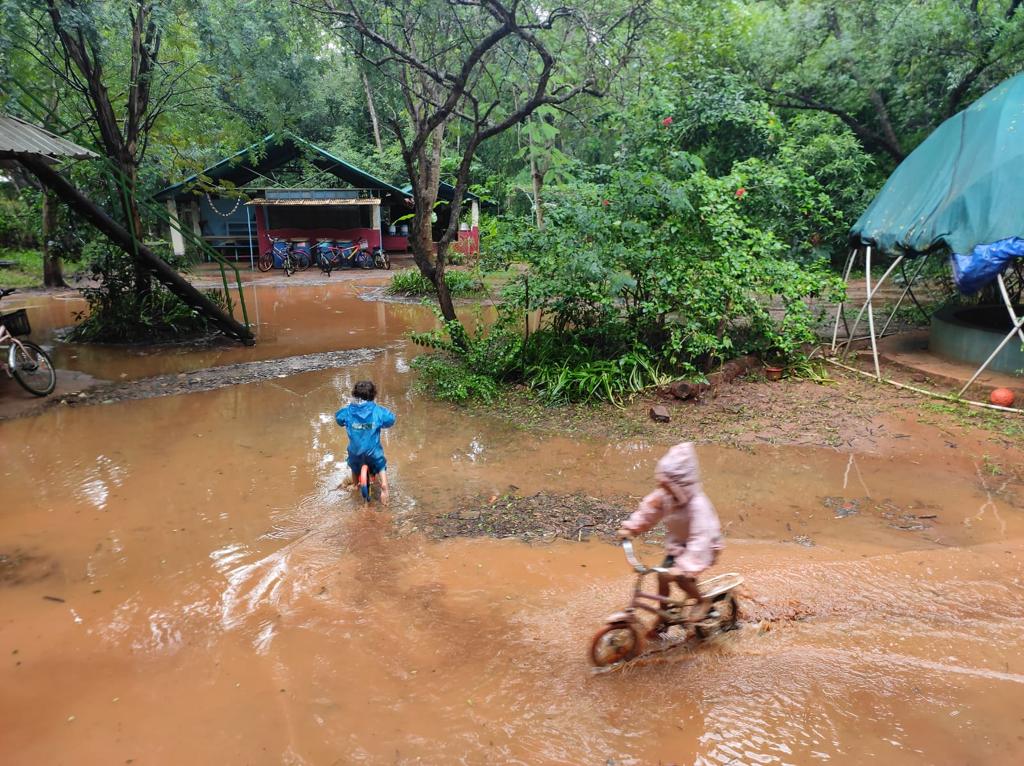
Absorbent mind
As young children have a mind with an awesome ability to absorb, we want to offer the child a nurturing and stimulating environment, as a learning community. From when the child is born, until the age of three the child uses mainly the senses (hands, skin, eyes, ears, and nose) to soak in everything that surrounds them. This unconscious creation happens to the child naturally, without thought or choice. All the information absorbed is what the child uses to construct and create herself/himself. So, for our very youngest members we would like to create many opportunities for sensorial exploration. Very quickly small children are walking, talking, and able to feed themselves. It is this incredible ability to absorb information that allows children to acquire language, physical skills (walking, control of her/his hands), as well as control over the bodily functions that are necessary for future independence. During this first phase the child is developing basic faculties and functions through mimicry.
Around the age of three years, there is a transition from the previous state of the unconscious absorbent mind, to a state of a conscious absorbent mind. It is during this period that the child will start to intentionally direct and focus attention on experiences that will develop that which was created during the first three years. We see that during this conscious phase of absorption that happens from the age of 3-6, the fundamental task of the child mind is intellectual development and freedom. The mind now compels the child to sort through, order, and make sense of the information that was previously unconsciously absorbed. Through this order of the intelligence the child gains the freedom to move purposely, to concentrate, and to choose his own direction. This leads to the principle of education “from the near to the far”. The child has now become a seeker, consciously looking for experiences to expand their newly developed faculties and abilities.
If the mind does not get the right stimulation during these early formative years, certain parts of the brain will not develop to their full potential later. Here is where the second super-power is essential as the guide, because if a child is allowed to learn following her/his sensitive periods, then “mind is consulted in its own growth”, and can develop to its fullest potential.
Saplings – Children ages 6+
To support children to develop self-knowledge, each term starts with the creation of an individualized lotus diagram for each child together with their mentor. This is a mind-map that gives an overview of what the child wants to learn/explore/develop in the three months to come.
Mentor support for each child and for the whole family.
Building independence
 | My mentor drives with me, and I learn to become independent and to focus my attention. |
 | My mentor and I drive together. I learn to plan and to organize myself to follow through with my plans. |
 | I drive myself when I can take responsibility for my learning and I am independent. |
Planning and Reflection
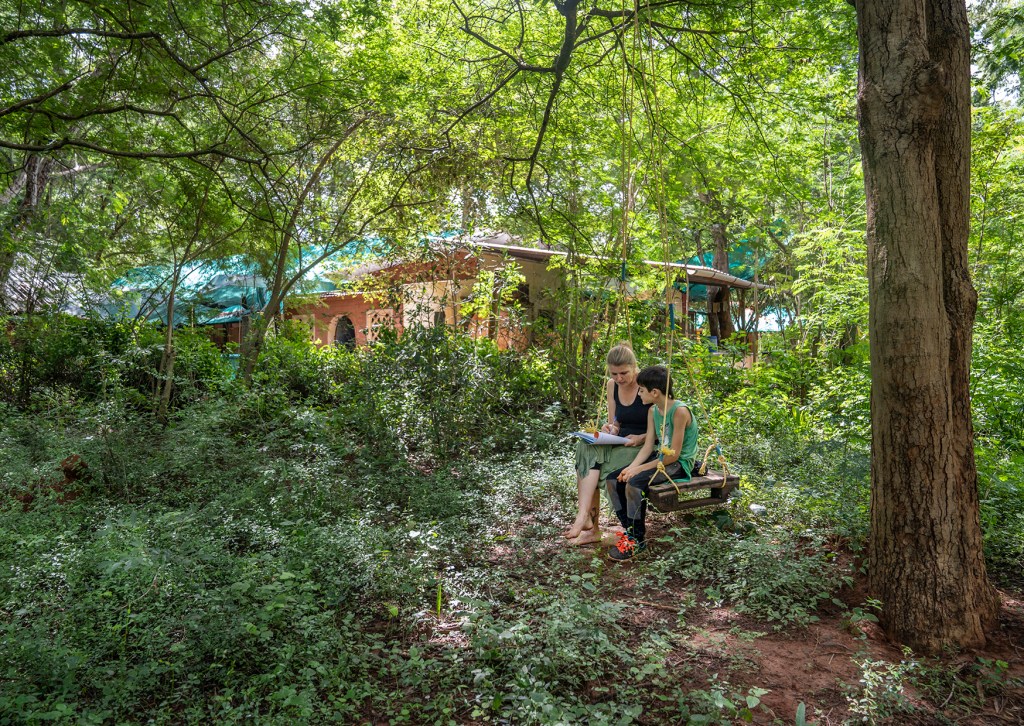
To help the child follow through with their term plan, a weekly planning and reflection meeting gives guidance in the implementation process. Through a facilitated reflection the child becomes aware of their learning, highlights strengths and challenges, and learns how to learn.
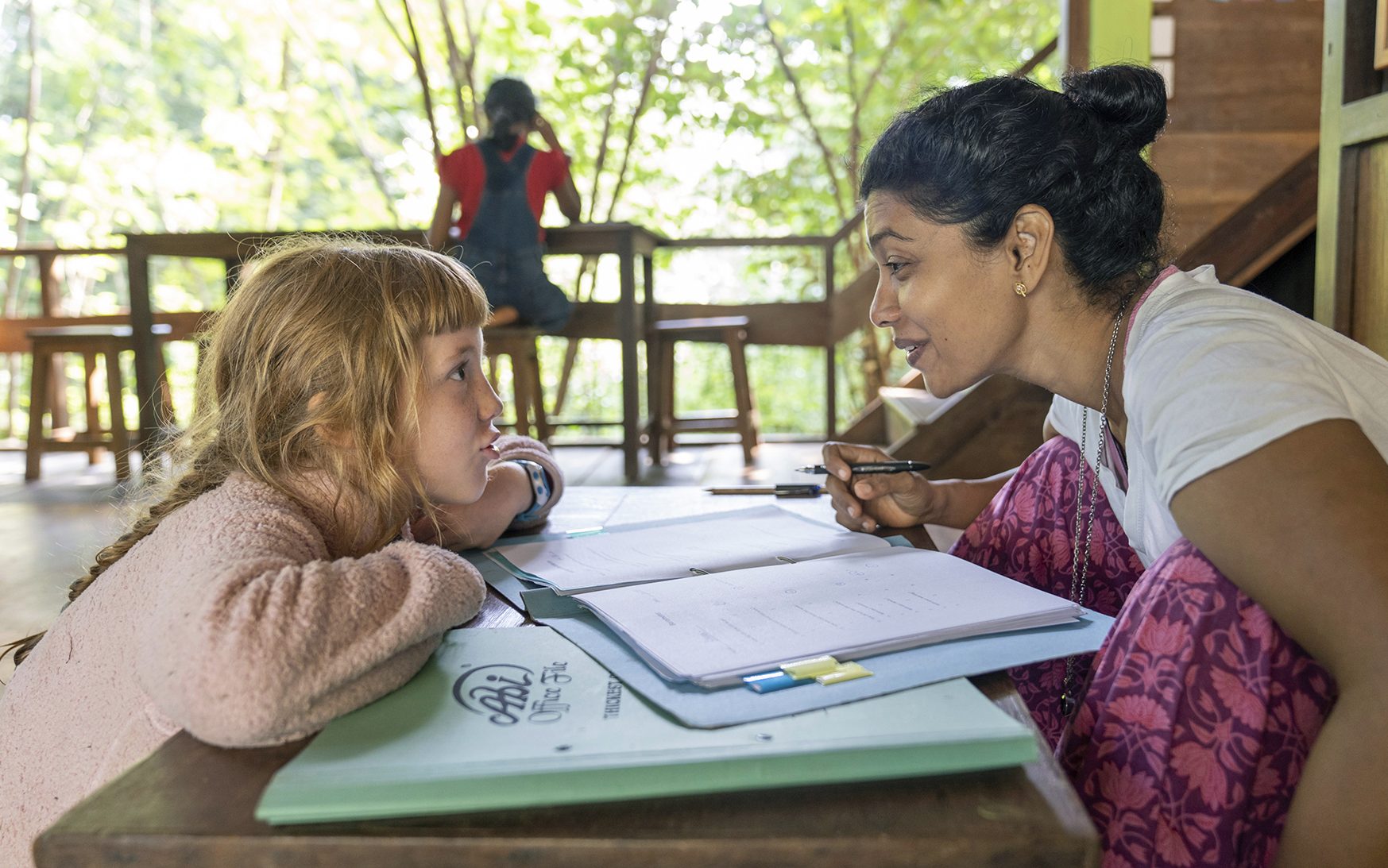
Mentor (link document)
ATB: Awareness Through the Body
Awareness Through the Body (ATB) are exercises that aim to raise awareness and enable children and adults to become conscious of their own perceptions and abilities so that they become more self-aware and self-directed.
“Integrity”
I stand for that which is true to me.
Knowing myself
“Sincerity”
I speak from my heart with care for others.
Learning to live together
“Engagement”
I live what I stand for.
Human Unity & Sustainable development
 TLC Auroville