Children 2-6 years old
The history of the Nursery
It all started on 2020 in 4 family homes …
We faced the age-old dilemma of childcare; we couldn’t find any options that truly aligned with our values around community and relationships and freedom for the child to explore, play and discover.
Spearheaded by a mother of three and her own experiences with “Ganorim” playgroups in Israel, we began a rotating roster of playgroups’ in our homes. Fast forward to three years later…
Together, we have learned and grown alongside our children, as individuals and families. Seeing what our children receive from this involved model of community-care has sustained us through the many resilience-testing moments of establishing a new programme. It truly has been a self-stretching experiment. We know we have made fond, hilarious, entertaining (and quite a few forest exploration muddy dirt-filled) “forever” memories for our families and children.
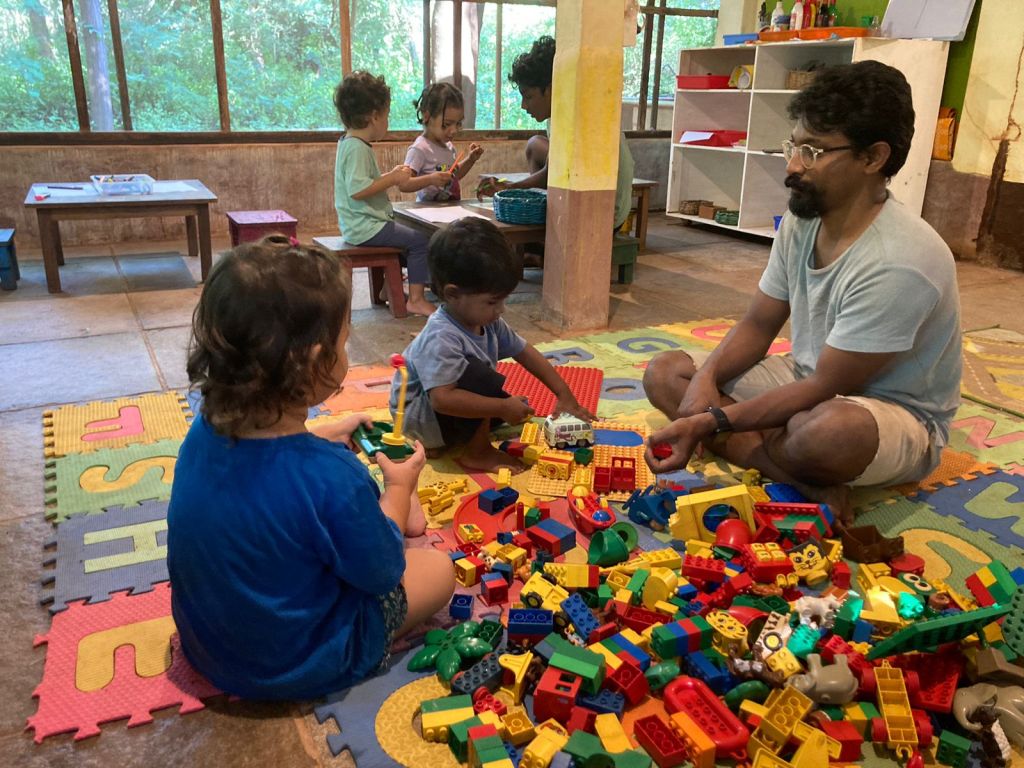
“The experience of TLC has been transformative for me and my family. Seeing my daughters, Mae and Noa (3 and 6 years), grow in confidence and emotional security is so heartening. I see how strong the bonds are between my daughters and the other children and facilitators – it’s like a big family… filled with a sense of belonging and connection.” – Helena
The Bigger Picture…
In 2022, we officially became a part of The Learning Community, gratefully stepping into the dormant Nursery premises at the back of the campus, nestled amongst the forests of Auroville. TLC now offers a seamless, holistic educational journey from the age of two years old onwards. As the Nursery aged children grow, they are able to weave in and out of the older “Saplings” program depending on their needs, offering all the dynamism and depth of multi-age educational approaches.
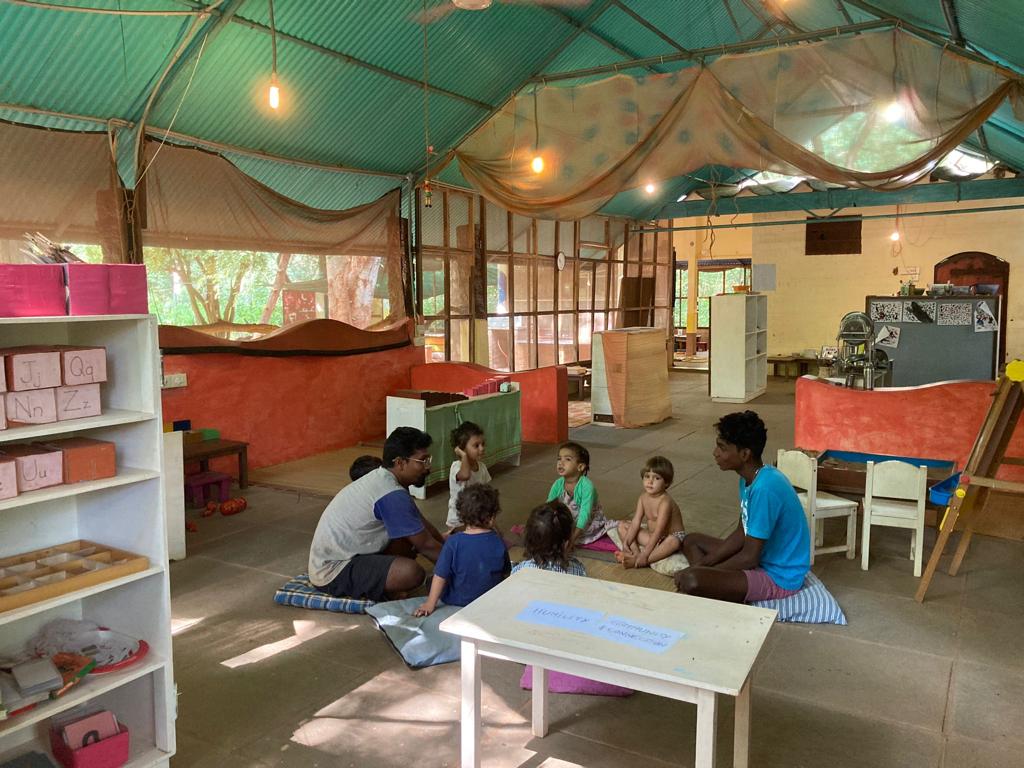
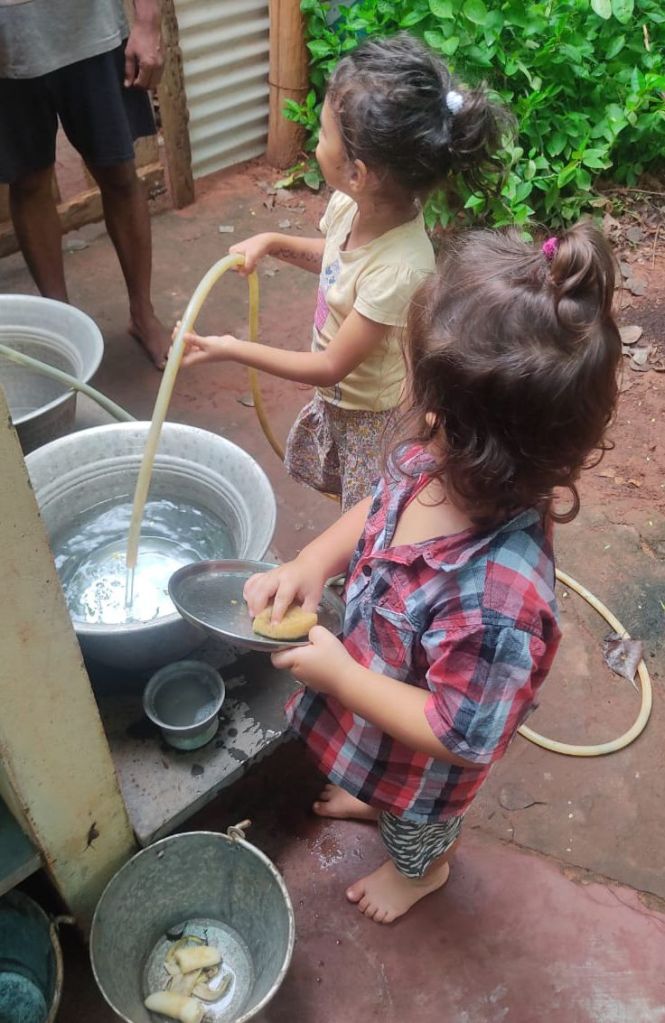
“When I was looking for a Nursery for my daughter Syienna (2 years), what stood out for me about the TLC Nursery was was the community approach and how the facilitators held the space… weekly circle meetings with open discussions equally between parents, kids and facilitators… offering a range of experiential learning from gardening, art to bakery and movement from mixed-age groups from diverse countries. When I saw how comprehensive TLC was I wanted Syienna to be a part of this. Since joining, I see her happiness. The space gives her freedom and gentle supervision. At 2.5 years old, she is already gaining independence – washing up her own plate and cleaning up after games. TLC is nurturing her, I am so happy to see Syienna thriving.” – Valentina
TLC Vision
Children have the freedom and autonomy to discover themselves and the world around them; to inculcate a deep sense of self-worth and belonging. As parents and adults, we learn and grow alongside our children in the context of authentic relationships and active community.
Nursery values
ACTIVE COMMUNITY… authentic relationships of co-learning, co-creating, care and support in and outside the TLC space. Relationships of love, compassion and safety (physical and emotional) for ourselves and for our children.
FREEDOM… to explore. To BE. To nurture curiosity and a sense of magic. Appreciating the uniqueness of each child and meeting them where they are at. Recognising the role of boundaries, routine and “sturdy leadership” in sensitively providing the foundation for freedom.
CONNECTION… to self, our inner worlds and to the world around us. Free play in nature to nurture a sense of ease, wonder and belonging in the natural world… caring for and respecting the environment.
PERSONAL GROWTH… as individuals, as a family, and as a community at every level; social, emotional, spiritual, physical. Working with diversity and different ways of relating, cooperating and collaborating.
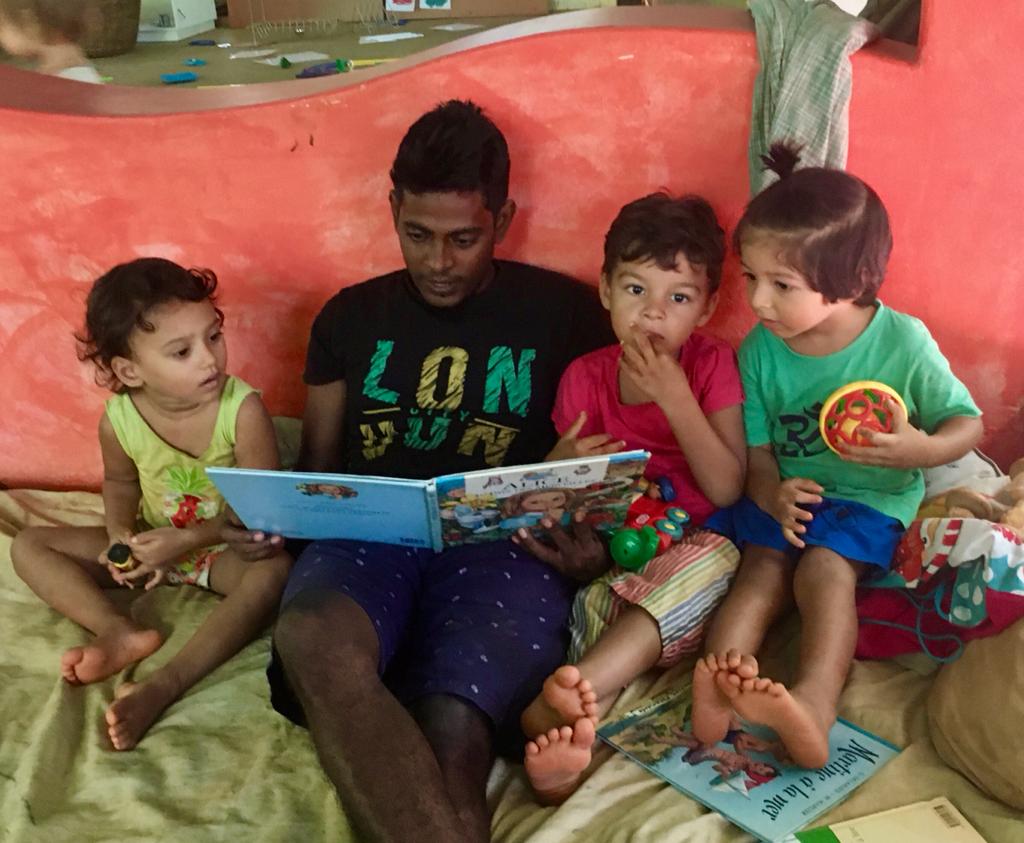
From concrete exploration toward abstract understanding
The mind develops its understanding from that which is experienced by the child, slowly to expand outwards together with the child’s learning. Based on sensorial experiences our brain is capable of constructing abstract concepts, this way the learning process takes place, and new knowledge becomes a part of oneself. Therefore, we see concrete, sensorial experiences being the starting point for the child, a context to begin with and connect to. For this to be possible, the facilitator needs to know the children well, and the entrance and areas of relevance may be very different for different children.
In all our areas of exploration, nature and the elements are the very much present in the work with the children. This is a red thread that follows through the whole TLC adventure, from toddler to teen to adult.
Building independence
Every child is born with a potential for independence, and independence of body, mind and spirit. This is a process that we see a great need to nurture and support in TLC, by following the child, removing barriers and allowing them to reach their full potential. We do not want to compare one child’s skills with another, nor rush or force a child to do something they are not ready for.
This journey to independence begins the day a baby is born. Unfortunately, the child’s yearning for independence often clashes with the way we adults want things done. We see our role as parents and facilitators to embrace the child’s needs, and to support its unfolding. Helping a child unnecessarily will be a hindrance to the child’s development.
For a child to learn to understand the interdependence of us all, is something that brings forth the capacity to fully function as an empowered individual in our world. This fundamental foundation for this independence is laid at the beginning of a child’s life. The child is equipped with the inner drive that incites her/him to develop. By trying to understand these inner drives and offer the best guidance and environment in which that foundation of the personality can be formed, we wish to help the child reach her/his full potential.
Only the child can achieve self-construction. We as adults have the responsibility to assist this process. What we as adults can do is study to understand the stages of growth that the child is journeying through, and to prepare ourselves and the environment to foster that development. Other than that we see the need to let go and allow the child to be free, as it is the child who strives to be independent to grow and to learn.
Movement is a major acquisition of independence. From lifting the head, rolling over, learning to crawl, walk, jump. The small child needs freedom to move. The child’s hands have an urge to manipulate objects. The hands are the tool of the intellect. Through coordinating the hands, the child can master the environment, so we want to provide the child opportunities that will help the progress of this grasp, hand strength and fine motor control.
When we work with building independence in the small children, we want to offer them opportunities to develop certain skills through activities that isolate different difficulties. Through repetition and through free choice, the child builds up skills and experiences success. This builds a psychological independence in the child, and is a pivotal time of the child forming her/his personality; to be able to assess, make choices, and experience consequences.
Order is very important during these formative years, as it helps the young child conquer the world. The order of objects the world and order of our responses to the child, will become part the child’s personality. As external order creates internal order and this is a significant foundation to the intellect.
Practical life activities
Practical life activities are the activities of everyday life, and the child observes these activities in the environment and gains knowledge through the real experience, of how to accomplish life skills in a purposeful way. Practical life activities help give the child a sense of being and belonging, established through participation in daily life with us. Through these activities the child gains control in the coordination of her/his movements, gains independence and social skills. Through these activities also support the growth and development of the child’s intellect and the ability of concentration.
- Elementary movements (holding, carrying, putting down, picking up, etc., and all that is a part of the child’s daily environment, walking, jumping, balancing, climbing, sitting down, getting up…)
- Looking after the environment (dusting, cleaning, washing, watering…)
- Looking after oneself (dressing, undressing, bathing, combing hair…)
- Social relations (greeting, offering, accepting, apologizing, sharing, waiting for one’s turn…
By giving the child the chance to care for and interact with the environment, the desires of the mind and the movements of the body learn to coordinate. We also see that activities like this draw the child into concentration, leading to self-discipline. We want the child to experiencing activities that allow mastery the movements and also to learn to care for the self, like dressing, eating and personal hygiene. We want the child to experience her/his own abilities: and to be allowed to practice in an unhurried setting. All this guides the child towards functional independence, and to be able to meet her/his own needs.
Language
Language is the other major conquest of the young child, which allows for successful social interaction. The child can absorb whatever language is in the environment without effort, just by living. This is where we would like to expose the children to the Tamil language, as well as all the other languages that exist in our community. If we offer positive, stimulating communication, the child will experiences language as alive, useful, and exciting. It really is a simple with children at this age, as what goes in comes out. We need to offer rich and real vocabulary, with specific terminology that can help the child order and classify the world, and to eventually use those terms to express her/his thoughts, feelings, and needs.
- The child constructs spoken language through songs, stories, and putting words to everything in the world.
- Spoken language is intricately involved in the process of developing the faculty of thinking. To develop this the child needs to be spoken to and listened to often. And the child needs to feel free and encouraged to communicate.
- The child starts to explore the written language, connecting symbols and sounds. When the child becomes fully articulate, she/he will be able to read and write with ease.
- We are a community rich with languages, and we see that it is during the early years that we want to have a large focus on Tamil, as this is when it can easily be absorbed by the child.
Mathematical thinking
Mathematics is like language, a product of the human intellect. Numbers are all around us, and small children are attracted to this. We need mathematics to understand the world we live in. Humankind has a mathematical mind, that estimates, quantifies, identifies, sees similarities and differences, patterns, and creates mental order. For small children it is through sensorial explorations that the child comes into contact with mathematical concepts.
Social development
The young child is developing social skills, and at first only works alongside others. It is not in a small child’s nature to share yet or even take turns. We see that each child chooses what work to engage in, and to engage for as long as she/he wishes. It is first at around the age of four and a half, that children may begin to collaborate in small groups successfully. But before this natural social interactions take place among the mixed ages of children, which is especially rich in TLC.
A mixed age environment allows children to help and learn from each other. Younger and older children get experience working together, inspiring each other. This concretely shows the children both what they will be able to work with when they have developed further skills, as well as helping them to stay connected with the things they have learned in the past, by seeing and helping others. The mixed-age environment also nurtures care, waiting for one’s turn, collaboration, tolerance, patience and a sense of learning together. Sharing a space where each one is doing something different brings acceptance of individual needs, minimizing competition. It also enforces the need to respect and care for other’s work and other’s concentration, not to disturb and cut someone else’s flow. The Integral Learning environment becomes a dynamic, social and interactive space.
Sensorial awareness
Sensorial activities are key to the development of the child’s consciousness. It is through the senses that the child studies her/his environment and begins to understand it. Through sensorial experiences the child starts to classify and organise the world, supporting the development of the mind and its functions. Here Nature exploration plays an important role.
- Visual sense to learn how to visually discriminate differences between similar and differing objects (colour, shape, size…).
- Development of the tactile sense, the sense of touch. This sense is spread throughout the body, but also focused to the tips of the fingers in the right/left hand of the child, where the child can focus and experience a concentration of the feeling. Here nature plays an important role, water, sand, mud, different surfaces, trees leaves…)
- Through exercises where the child learns to feel the difference of pressure or weight, the child develops the baric sense.
- Through thermic explorations the child works to refine her/his sense of temperature.
- To refine and to become sensitive to the sounds in the environment there are exercises to develop the auditory sense (music, singling, sound memory, listening for sounds, identifying sounds… )
- To develop the olfactory and gustatory senses the child is exposed to different foods, and flavours, smells and learns to distinguish these from each other.
- Through work with the stereognostic sense, the child learns to feel objects and make recognitions based on what she/he feels. When movement of the hand or arm are involved in the touching of an object, an impression of movement is added to that touch. This impression is attributed to a special, sixth sense, which is called a muscular sense. It allows impressions to be stored in a “muscular memory”, which recalls the movements that have been made.
“For my son, Amsel (2 years) the multicultural aspect of TLC is beautifully shaping his learning journey – there are children from 6 different countries in the Nursery, not to mention many more in the older group of children. I can see Amsel building his world, and I can clearly see that TLC is playing a significant role in this. I see my son crafting his path for the future.” – Edward
A morning in TLC Nursery
Children arrive in the morning, delighting in morning discoveries like fallen branches, puddles from overnight rain and new mushroom patches! They follow a winding forest path to our Nursery where they are warmly greeted by our Facilitators (hugs, fist bumps and high fives are a firm favorite morning “hello”!) before farewelling their parent / caregiver.
Mornings are for focused, independent play inside, exploring our reading corner, blocks and building materials, sandbox, Montessori language and numeracy materials and “Life Skills” corner (scooping, cutting, pouring etc.). Facilitators offer support and also step back to allow freedom for the children to explore in their own way.
At 10am, a chime calls for morning circle time… children gather, grabbing favorite pillows, singing songs, sharing feelings, and hearing announcements. Next, they prepare their own snacks from seasonal, locally sourced food from TLC’s kitchen.
After washing their plate, the children explore outside as well as the “creative play” hut filled with dress ups, dolls, soft toys, and pretend play materials like kitchenware… often becoming deeply immersed in imaginative play alone or with each other. In the forest, cycling, searching for tamarind fruit to eat and collecting special sticks and leaves are an inevitable part of each day! Weekly excursions to local farms, gardens and one another’s homes fosters connection to the larger community and a spirit of adventure and discovery as a group.
Another chime signals cleanup and lunch preparation, with children joining facilitators to tidy up and set the table. Sharing lunch together is often a sweet group bonding moment with many animated stories and occasional song! After washing up and playing outside, it’s time for pickup. Parents often help with cleaning, catching up with one another and Facilitators, sharing highlights or challenges… with everyone leaving feeling a healthy dose of support and connection!
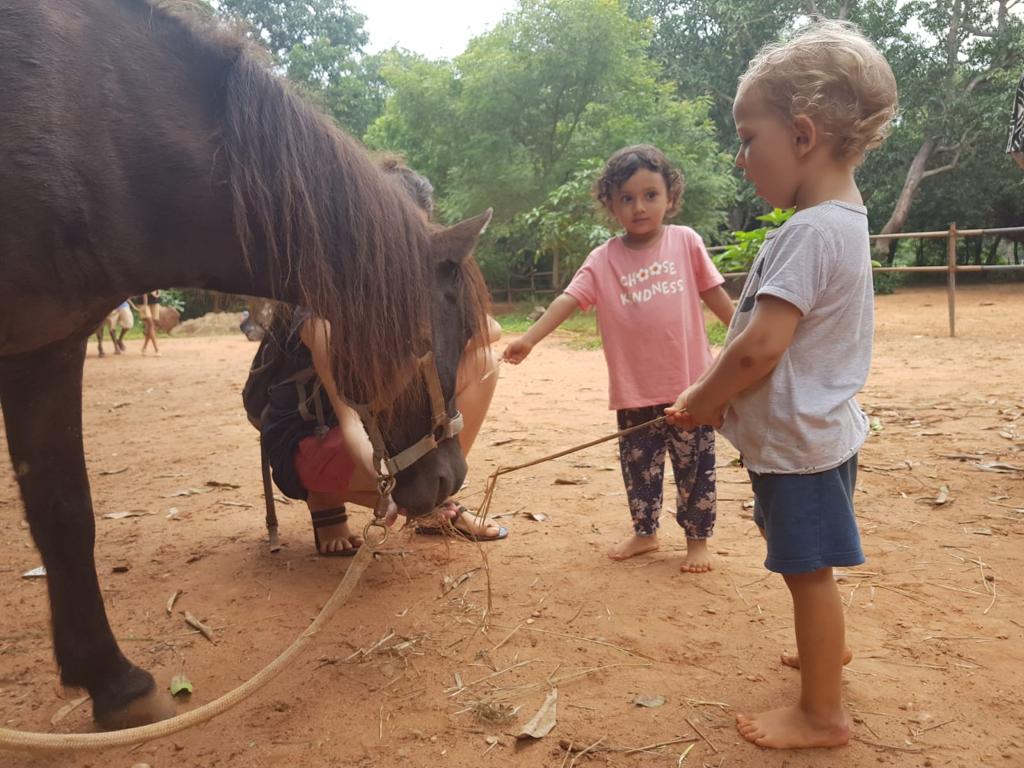
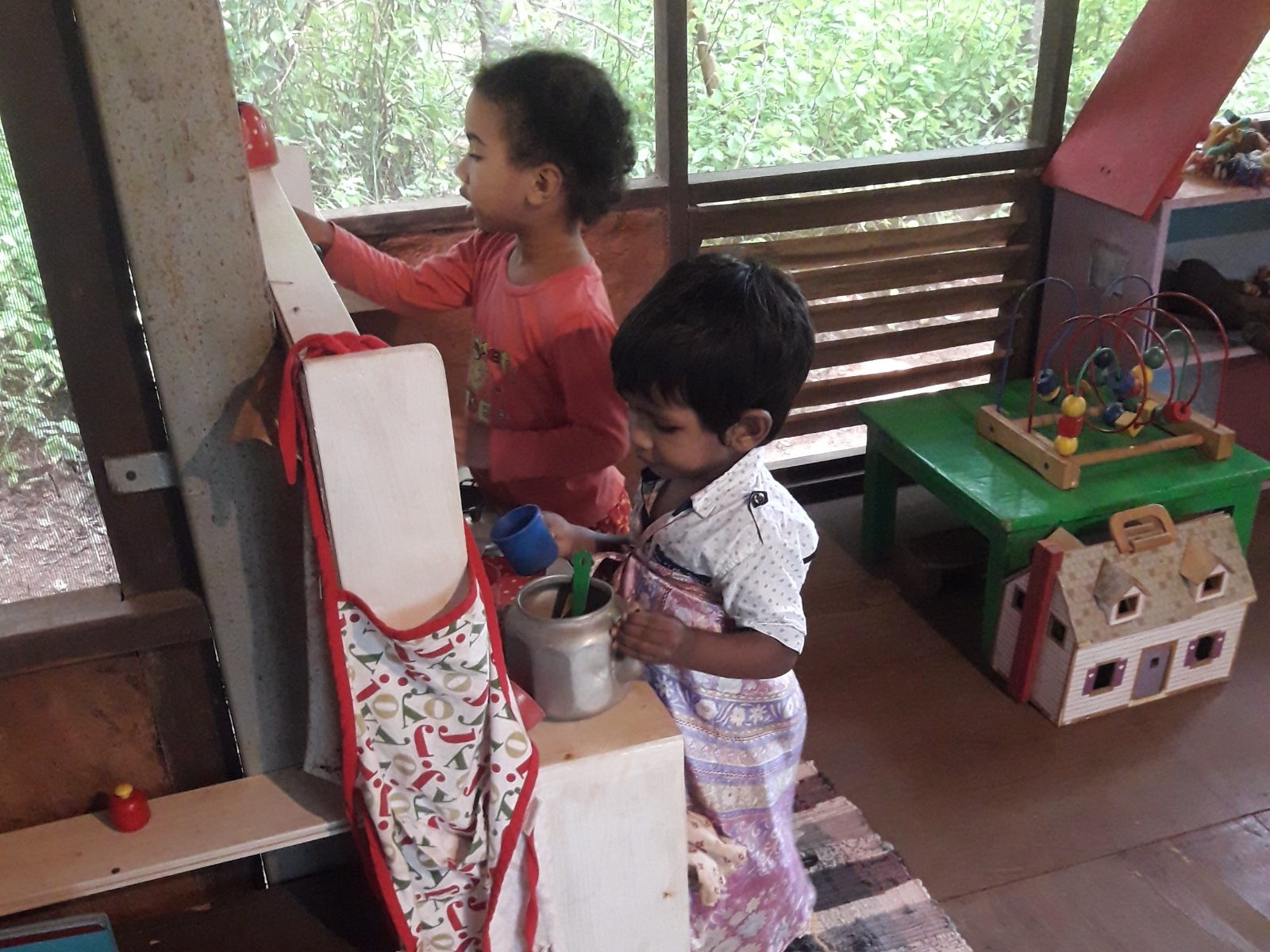
“I joined TLC when my son, River (3 years) was 6 months old. We chose TLC for its genuine care and understanding, despite the substantial work involved as a parent. The deep love, acceptance, and commitment to growth keep me coming back. These families have become close friends with whom I share laughter, tears, and growth outside the nursery. When we started, River was sensitive to sounds and new environments – the process of him joining the Nursery was so thoughtful and mindful of his sensitivities… and I see how this has increased his confidence and resilience. He is not more autonomous, embracing tasks like cleaning, and most importantly, he loves connecting with everyone at TLC. It’s become like an extension of home…” – Georgia
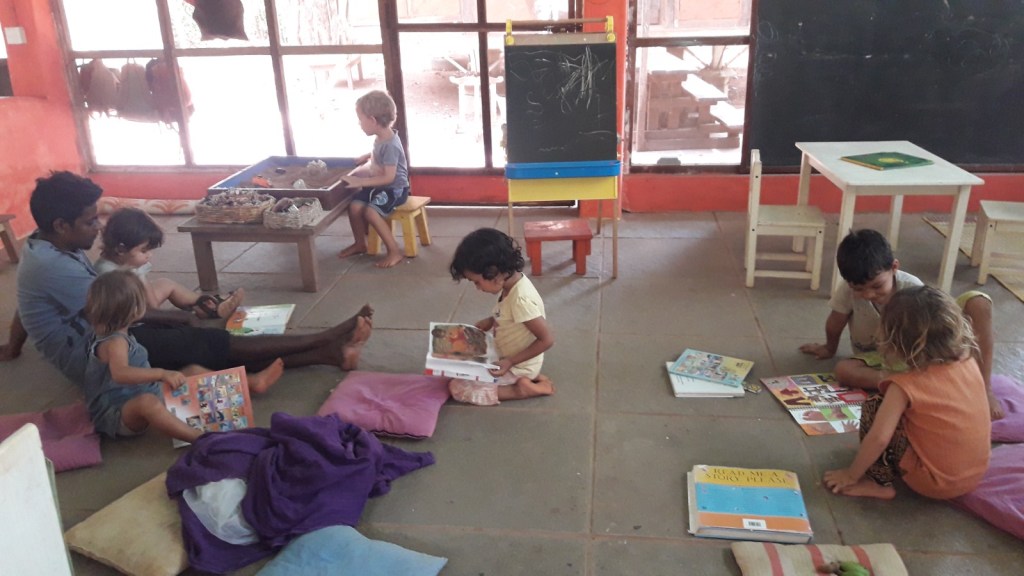
“I really feel that my children, Roo and Dharani, (2 and 4 years) receive unconditional care and acceptance at TLC – it feels like an extension of family… all the team, all the parents understand each unique child and hold space for them. In the tough moments, there is no labelling or judgement, just genuine care and often sensitive insights into the needs behind the behaviour. These relationships, they’re not just at school – they are part of our lives, our every day. It makes ME feel a sense of belonging, secure… I can only imagine it’s the same for my family… I am so grateful!” – Lauren

 TLC Auroville